Most built environments are designed as if change were an exception. Offices are planned around stable teams, retail spaces around fixed assortments, and event venues around predefined formats. Walls go up, layouts are approved, and the space is expected to perform its role for years with minimal adjustment. This approach made sense in a slower world - but it struggles under modern conditions.
Today, change is not an interruption; it is the baseline. Teams reorganize, workflows shift, audiences rotate, and spaces are asked to host multiple functions within the same week, sometimes the same day. Yet the architecture surrounding these activities often remains static. As a result, people adapt to space through workarounds: improvised partitions, temporary furniture, ad-hoc signage, and constant compromise.
Fixed architecture fails not because it is poorly designed, but because it assumes permanence in environments defined by motion. Once walls are built and rooms are locked into place, spatial decisions become difficult, slow, and expensive to revisit. Every change turns into a project; every adjustment requires justification. Over time, this rigidity accumulates friction - not only in how space is used, but in how organizations think about using it.
Designing spaces for change requires a different starting point. Instead of treating layout as a final answer, it reframes space as an evolving system - one that can respond to shifting needs without reconstruction. Understanding why fixed architecture fails fast is the first step toward designing environments that remain useful, relevant, and humane as conditions change.

Why Fixed Architecture Struggles Under Constant Change
Fixed architecture is built on a promise of certainty. A room is designed for a specific function, a wall defines a permanent boundary, and a layout assumes that people, workflows, and behaviors will remain largely consistent over time. This model works well in environments where change is slow and predictable. The problem is that most contemporary spaces no longer meet that condition.
Modern offices, public venues, and commercial environments operate under continuous pressure to adapt. Teams reorganize, departments expand or contract, events rotate, and usage patterns fluctuate daily. Yet fixed architectural decisions do not age gracefully under these conditions. What once felt intentional becomes restrictive. What was optimized for one scenario begins to obstruct the next.
The core limitation of fixed architecture is not material or aesthetics - it is commitment. Once spatial decisions are embedded in walls, ceilings, and permanent partitions, they become costly to revise and psychologically difficult to question. Over time, organizations stop asking whether the space still serves its purpose and instead ask how people can adapt around it. This reversal quietly shifts the burden from design to behavior.
As a result, friction accumulates in subtle ways. Circulation paths no longer match movement patterns. Meeting rooms are either overbooked or underused. Informal collaboration spills into corridors, while quiet work retreats into improvised corners. None of these issues stem from poor intent; they arise because fixed systems resist recalibration. The environment remains static while reality moves on.
In fast-changing contexts, architecture that cannot adjust becomes a constraint rather than a support. It locks decisions in place long after the conditions that justified them have disappeared. Over time, this rigidity forces organizations into a cycle of workaround solutions - temporary dividers, ad-hoc furniture, signage - that treat symptoms instead of addressing the underlying mismatch between space and use.
Typical signs that fixed architecture is no longer aligned with real use:
- Spaces designed for one function are routinely repurposed without redesign
- Circulation feels forced, indirect, or unintuitive
- Informal activity appears where it was never intended
- Quiet zones rely on behavioral rules rather than spatial cues
- Any meaningful change requires approval, budget, and downtime
When architecture cannot respond at the pace of change, it quietly dictates behavior instead of enabling it. Understanding this limitation is essential before exploring what adaptive, reconfigurable systems make possible.
Geometry as the Missing Layer Between Space and Behavior

Before people respond to instructions, policies, or furniture, they respond to geometry. The width of a passage, the height of a boundary, the angle of an opening, or the rhythm of repeated elements all communicate expectations long before a sign is read or a rule is enforced. Geometry operates quietly, but it is one of the strongest drivers of behavior in built environments.
Traditional architecture often treats geometry as a static backdrop. Once defined, spatial relationships remain unchanged, even as patterns of use evolve. Over time, this disconnect becomes visible: spaces that technically function still feel misaligned. People hesitate where they should move, gather where circulation was intended, or avoid areas that were designed to attract activity. These behaviors are rarely random; they are responses to geometric signals that no longer match reality.
What makes geometry particularly powerful is that it works without explanation. People do not need to be told where to slow down, where to pause, or where to focus. A narrowed threshold naturally reduces speed. A lowered header signals transition. A slight rotation shifts attention and redirects movement. These cues shape experience intuitively, often more effectively than rules or signage ever could.
When geometry cannot change, behavior compensates. Teams invent informal norms, rearrange furniture, or rely on constant coordination to manage space. This effort is usually invisible, but it consumes time, energy, and attention. The environment stops supporting activity and starts demanding management. At that point, architecture becomes passive, and people do the work geometry should have done for them.
People do not experience space as plans or sections. They experience it as movement, boundaries, and thresholds.
Understanding geometry as an active layer - rather than a fixed container - reframes how space can be designed. It shifts focus away from permanent solutions and toward spatial relationships that can be adjusted as behavior changes.
Geometric cues that strongly influence how people use space:
- Height - signals hierarchy, focus, or openness without enclosure
- Angle - redirects movement and attention subtly, without barriers
- Thickness - suggests protection, separation, or importance
- Alignment - creates rhythm and legibility across zones
- Thresholds - define moments of entry, pause, or transition
When these elements are fixed, they lock behavior into a single interpretation. When they can be adjusted, geometry becomes a flexible language - one that allows space to respond to changing needs without relying on constant intervention.
When Space Becomes a System, Not a Decision

The key difference between fixed and reconfigurable architecture is not flexibility alone. It is agency. Fixed architecture turns spatial decisions into commitments that must endure long after their context has changed. Reconfigurable systems, by contrast, treat space as something that can be adjusted, tested, and refined over time. This shift transforms architecture from a one-time answer into an ongoing process.
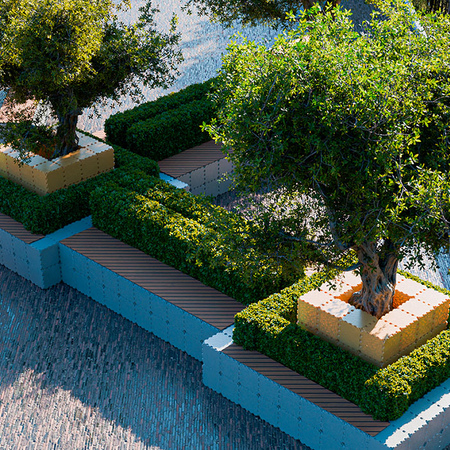
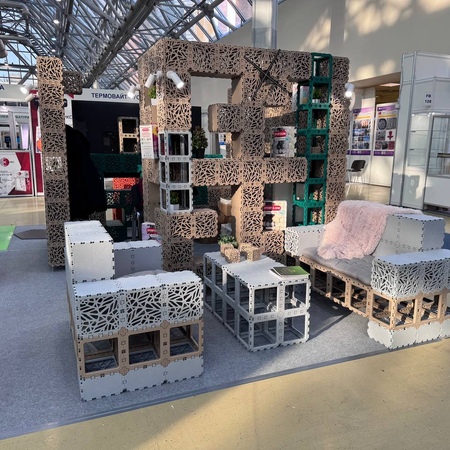
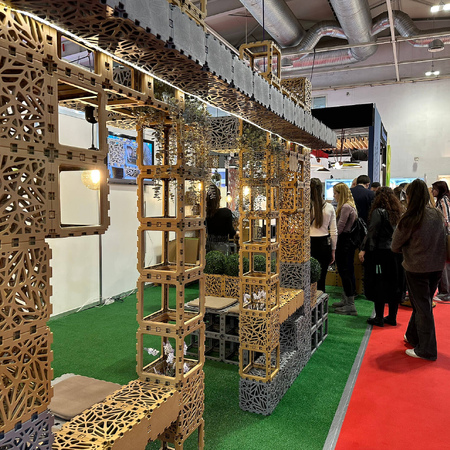
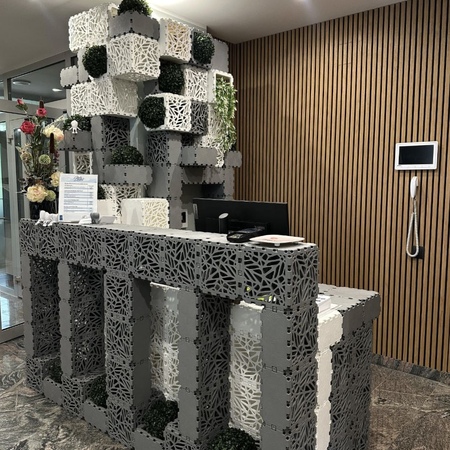
When space operates as a system, geometry is no longer frozen at the moment of completion. Boundaries can be repositioned, heights recalibrated, and thresholds reshaped as patterns of use evolve. Instead of forcing people to adapt to inherited layouts, the environment itself becomes responsive. This responsiveness does not require constant redesign; it requires coherence - a set of elements that work together predictably as they are rearranged.
What distinguishes a system from a collection of parts is consistency. When components share dimensions, proportions, and connection logic, each adjustment remains legible. Users intuitively understand where zones begin and end, how movement is guided, and what behavior is invited. The space maintains continuity even as its configuration changes. This continuity is essential: without it, flexibility quickly turns into visual noise or operational confusion.
Reconfigurable systems also change how decisions are made. Instead of debating layouts abstractly or committing to permanent solutions, teams can explore spatial options incrementally. A boundary shifts, an opening narrows, a header lowers - and behavior responds. Geometry becomes a feedback mechanism rather than a fixed constraint. Over time, this approach encourages learning: space is shaped by observation rather than assumption.
Most importantly, treating space as a system reduces the cost of being wrong. In fixed architecture, an incorrect decision is expensive and enduring. In a reconfigurable environment, it is temporary and informative. This reverses the traditional risk model of architecture and aligns spatial design with the realities of changing organizations, programs, and communities.
What becomes possible when space is designed as a system:
- Adjustment without disruption - layouts evolve without construction or downtime
- Continuous alignment - geometry can follow real patterns of use, not initial forecasts
- Lower commitment risk - decisions can be revisited without penalty
- Clear spatial language - consistency preserves legibility across change
- Longer relevance - environments remain useful as functions shift
When architecture stops insisting on permanence, it gains longevity. By allowing geometry to change, space remains aligned with the people who use it - not just at the moment it is built, but throughout its life.
Conclusion: Designing for Change Is Designing for Reality
Spaces shape behavior long before any rule, policy, or instruction takes effect. The geometry we walk through, the boundaries we sense, and the thresholds we cross quietly influence how we move, focus, interact, and pause. When these spatial decisions are fixed, they carry assumptions forward - even after the conditions that created them have changed.
Designing for change means accepting that no layout is final. It shifts the role of architecture from enforcing a single scenario to supporting many, over time. Instead of locking behavior into place, space becomes something that can respond, adjust, and remain relevant as people, programs, and patterns evolve.
Reconfigurable geometry does not eliminate structure; it refines it. By allowing boundaries, heights, and orientations to shift, environments gain the ability to stay aligned with real use rather than idealized plans. This approach treats adaptability not as an exception, but as a core design condition - one that acknowledges uncertainty without sacrificing clarity.
In a world where organizations, events, and communities change faster than buildings do, architecture must move beyond permanence as its primary goal. Designing spaces for change is not about predicting the future; it is about creating environments that can learn from the present and remain useful without starting over.
_450x450_390.jpeg)