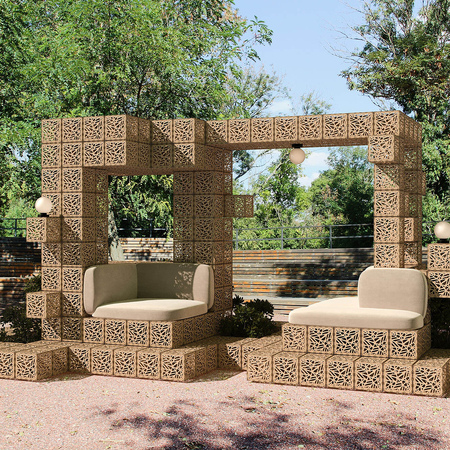
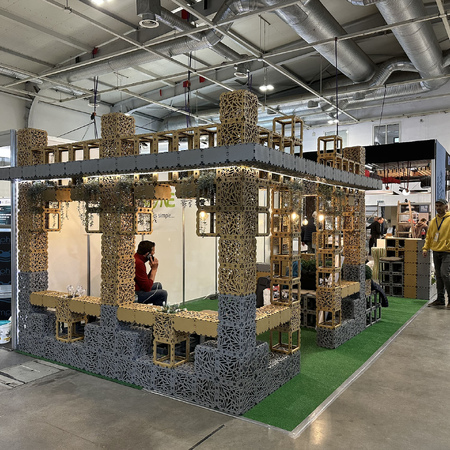
Office layouts are changing faster than leases. Teams grow, shrink, split, merge, and switch from deep work to group work daily. Traditional drywall can’t keep up, and heavy furniture freezes the room in a single state. Modular systems offer a different approach: lightweight structures, reconfigurable panels, movable planters, acoustic inserts, and micro-layouts you can shift in minutes.
Below - three essential zone types every modern office needs, and how to build them without construction.
Focus Zones: Quiet Corners That Really Work
Focus work doesn’t need a sealed cabin - it needs good acoustic shaping, partial visual privacy, and smart orientation. In open offices, noise often reflects between glass and hard walls. The fastest fix is to introduce soft-lined partitions, high-backed seating, acoustic headers, and staggered openings.
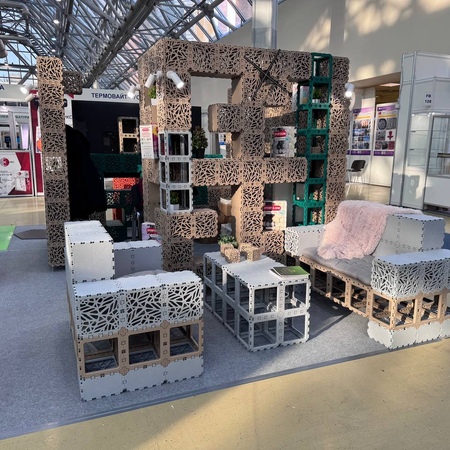
A modular system like Cubik.one helps create “pockets” that feel private without closing people in. Combine solid panels (for blocking) with perforated ones (for softening), and add felt inserts where voices hit first. Use high-backed benches or U-shaped nooks to shield laptops and faces from passers-by.
Practical elements for a reliable focus zone:
- High-back seating with soft inserts at ear height
- Solid back panel + perforated face panel for balanced acoustics
- A short header (15–25 cm) to block overhead noise
- Off-axis entrance so people walking by don’t face screens directly
- Small planter “anchors” to add mass and soften sound reflections
Pro tip: Position focus nooks away from copy machines, kitchens, and main walkways. Even perfect acoustics lose to constant foot traffic.
Collaboration Corners: Fast, Flexible, Team-Friendly
Collaboration happens in short bursts - a five-minute sketch review, a quick planning chat, or an impromptu stand-up. Most offices overestimate the need for enclosed meeting rooms and underestimate how much value comes from small, semi-open collaboration pockets. Modular systems make these pockets easy to create and just as easy to move when teams shift.
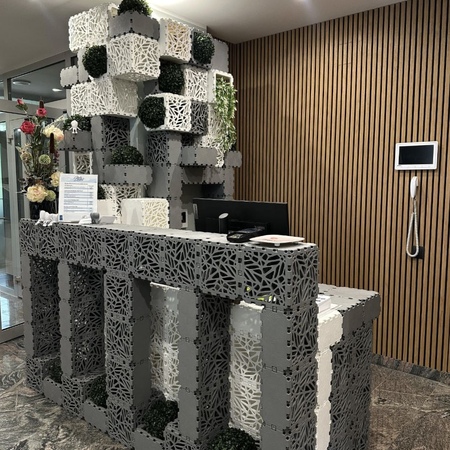
A good collaboration zone feels accessible but still protected from the buzz of the main workspace. A simple backdrop panel reduces distractions, while a narrow standing-height counter lets people gather without occupying a full room. Using a mix of solid and perforated panels helps shape the sound so voices stay in the circle rather than drifting across the floor.
Elements that make collaboration corners work:
- A solid back panel to block visual noise
- Perforated side returns to soften voices
- A standing-height counter for quick teamwork
- A short header to reduce overhead echo
- Movable planters to outline the zone naturally
Layout tip: Aim for an open front + defined sides - this makes the space inviting while maintaining enough structure for real work.
Breakout Areas: Reset, Recharge, and Informal Interaction
Breakout spaces support everything traditional desks don’t: decompressing, casual conversation, waiting between calls, short internal meetings, or stepping away from screen time. These zones work best when they feel comfortable, warm, and visually distinct from task-focused areas. Modular elements make it easy to mix seating, greenery, soft panels, and accessories into a relaxed composition.
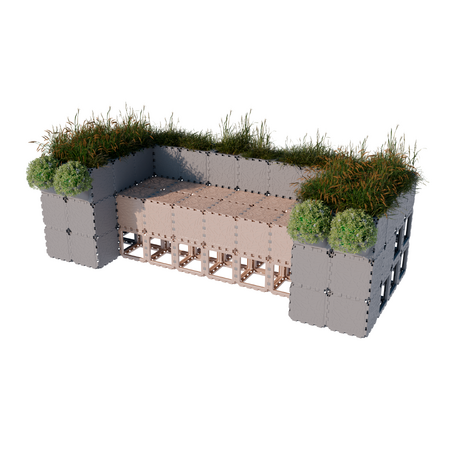
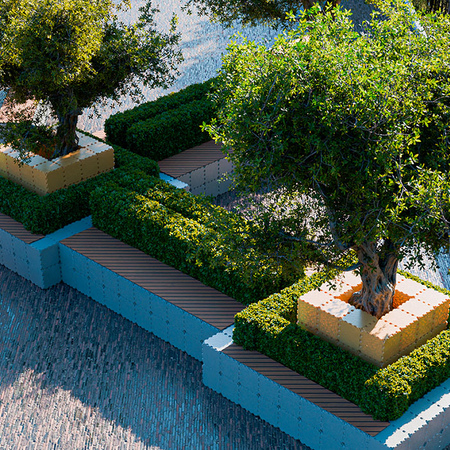
A breakout area doesn’t need height to feel sheltered — even low partitions or planters can create a gentle boundary. Perforated panels with greenery introduce biophilic comfort while reducing visual clutter. Modular benches can be rearranged for workshops, events, or larger gatherings without committing to a fixed layout.
Useful components for modern breakout areas:
- Low-height dividers to signal a calmer zone
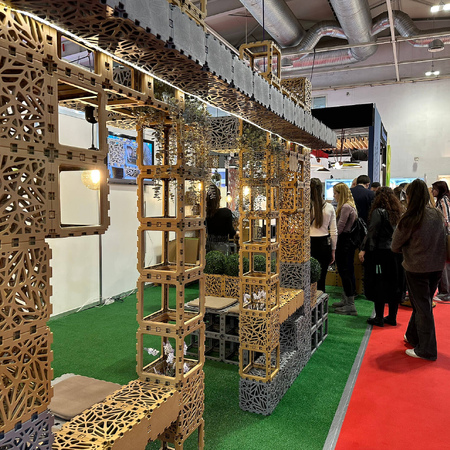
- Perforated panels with plants woven through
- Curved or angled layouts to break long echo paths
- Modular benches that reconfigure for different group sizes
- Soft lighting hidden in headers or shelves
Practical tip: Use warmer materials or softer-colored panels here — subtle visual cues help the brain understand that this is a recovery space, not a task space.
Conclusion: Why modular zoning works long-term
Modern offices rarely stay the same for long. Teams shift, priorities change, and work styles evolve - and your space should be able to follow. With modular systems, you’re not locking yourself into a single layout. Instead, you’re creating a flexible toolkit of panels, returns, headers, planters and benches that adapt to whatever the week brings.
A well-zoned workspace improves focus, speeds up collaboration, and gives people places to reset without needing construction or downtime. Build the zones your team needs today, reshape them tomorrow, and let your office stay comfortable, intentional, and ready for whatever comes next.
_450x450_390.jpeg)