Planting trees and large plants is often perceived as expensive, complex, and suitable only for permanent landscaping projects. In reality, many of the costs come not from the plants themselves, but from infrastructure decisions made too early: permanent foundations, custom-built containers, and fixed layouts that leave little room for adaptation. With the right approach, it is possible to introduce greenery affordably - even in urban, indoor, or semi-temporary environments.
This article explores how large planters and modular planting solutions make tree planting more accessible, flexible, and cost-effective, especially when permanent ground planting is impractical or undesirable.

Why Large Planters Are a Cost-Effective Alternative to Ground Planting
Traditional tree planting assumes access to soil, drainage layers, and long-term site stability. In many environments - offices, public interiors, courtyards, atriums, terraces, and temporary urban installations - these assumptions do not hold. Excavation, waterproofing, and structural reinforcement quickly drive up costs.
Large planters offer a simpler alternative. They eliminate the need for ground preparation and allow trees to be introduced without altering the underlying structure. When properly sized and designed, planters provide sufficient root volume, drainage, and stability for small to medium trees, while remaining far more affordable than permanent construction.
Key cost advantages of planter-based tree planting include:
- no excavation or foundation work
- faster installation with minimal labor
- predictable material and logistics costs
- the ability to reuse containers in future layouts
Instead of treating greenery as a one-time construction project, planters make it a modular investment.
Choosing the Right Planter Size for Trees and Large Plants
One of the most common mistakes in budget planting is undersizing containers. While small pots may seem economical, they limit root growth, increase maintenance, and shorten the lifespan of the plant — leading to replacement costs later.
For trees and large plants, container volume matters more than surface appearance. Deep, stable planters support healthier root systems, retain moisture more evenly, and reduce stress during temperature changes.
General guidelines when selecting large planters:
- prioritize depth over width for trees
- ensure sufficient drainage without excessive soil loss
- choose rigid, structurally stable forms that resist deformation
- allow space for future growth, not just initial planting
Well-sized planters reduce ongoing costs by keeping plants healthier and more resilient over time.
Indoor and Semi-Indoor Tree Planting: Practical Considerations

Planting trees indoors or in semi-enclosed spaces introduces additional constraints: weight limits, floor protection, light conditions, and maintenance access. Large planters simplify these challenges by acting as self-contained ecosystems.
Instead of building raised beds or custom enclosures, planters create clear boundaries between greenery and architecture. They protect floors, simplify irrigation planning, and allow plants to be repositioned if conditions change.
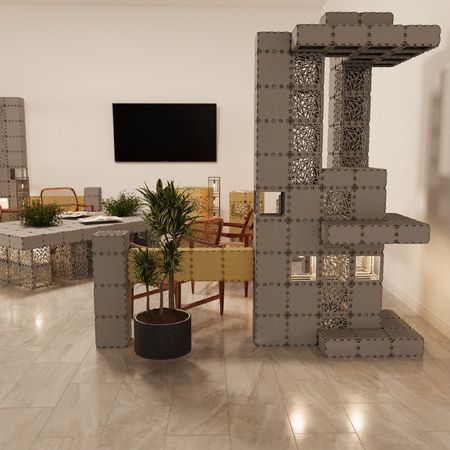
In indoor environments, planters also serve a secondary function: they shape space. Large planted containers can define zones, soften acoustics, guide movement, and introduce visual relief without walls or construction.
Affordable Strategies for Planting Trees with Containers

Keeping costs low does not mean compromising quality. It means planning for flexibility and reuse.
Effective budget strategies include:
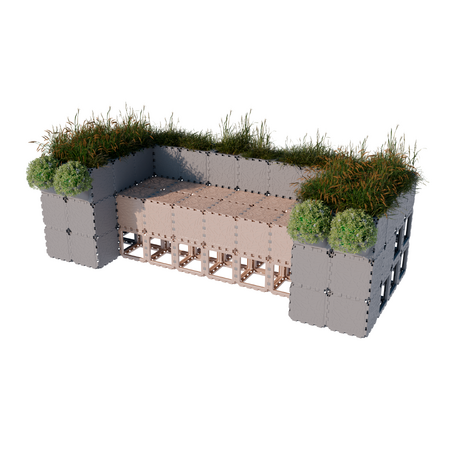
- selecting modular or repeatable planter sizes instead of custom designs
- using standardized soil mixes suitable for multiple plant types
- choosing hardy tree species adapted to container growth
- designing layouts that allow planters to be relocated rather than replaced
When containers are treated as part of a long-term system, the initial investment spreads across multiple uses: seasonal changes, layout updates, or relocation to new spaces.
Why Reusable Planters Matter More Than Decorative Pots

Decorative pots are often designed for appearance first and longevity second. Thin walls, limited volume, and poor drainage make them unsuitable for trees and large plants, especially in demanding environments.
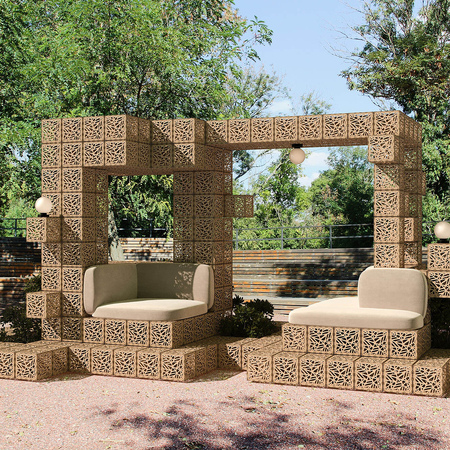
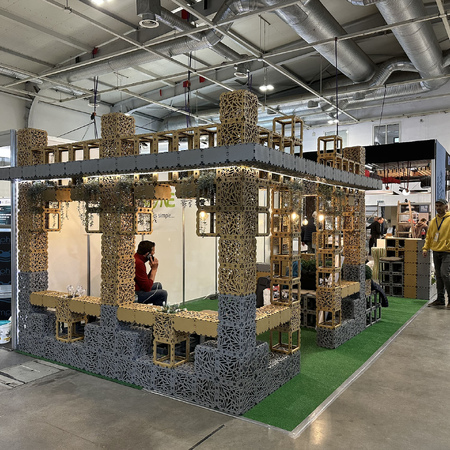
Reusable, well-constructed planters focus on structure, volume, and adaptability. They are designed to be moved, reconfigured, and repurposed - supporting not just plants, but changing spatial needs. Over time, this approach significantly reduces waste and replacement costs.
For organizations, public spaces, or homeowners planning multiple planting phases, reusable planters turn greenery into an evolving asset rather than a fixed expense.
Planting for Flexibility, Not Permanence
Affordable tree planting is less about cutting corners and more about avoiding irreversible decisions. Large planters allow greenery to grow alongside changing spaces - indoors, outdoors, and in between. They make it possible to introduce trees gradually, adjust layouts over time, and respond to real conditions instead of predictions.
By choosing scalable, reusable planting solutions, trees become part of a living environment rather than a permanent constraint. And when flexibility is built in from the start, planting trees becomes not only more affordable, but more sustainable in the long run.
Conclusion: Planting Trees Affordably Starts With Flexibility
Planting trees and large plants on a budget is not about choosing the cheapest pot or cutting corners on soil and care. It is about avoiding decisions that lock costs in too early. Large planters make it possible to introduce greenery without excavation, construction, or irreversible commitments - which is where most budgets quietly disappear.
When containers are properly sized and built for reuse, they support healthy plant growth while allowing layouts to evolve. Trees can move as light conditions change, spaces are reconfigured, or functions shift. This adaptability reduces replacement cycles, limits waste, and extends the value of both plants and containers over time.
Affordable planting is ultimately a systems mindset. By relying on reusable planters, standardized sizes, and modular layouts, greenery becomes an asset that grows alongside the space rather than a fixed expense tied to a single moment. In this way, planting trees is not only more accessible - it becomes a long-term, adaptable strategy for healthier indoor and urban environments.
_450x450_390.jpeg)