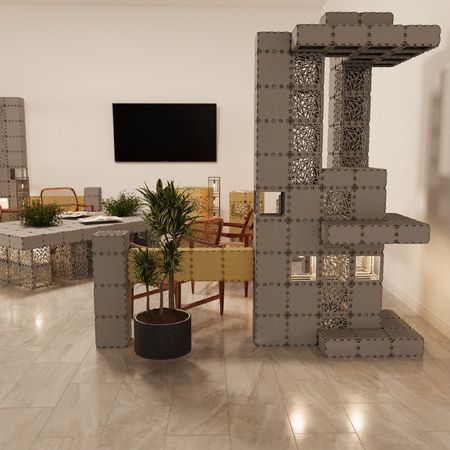
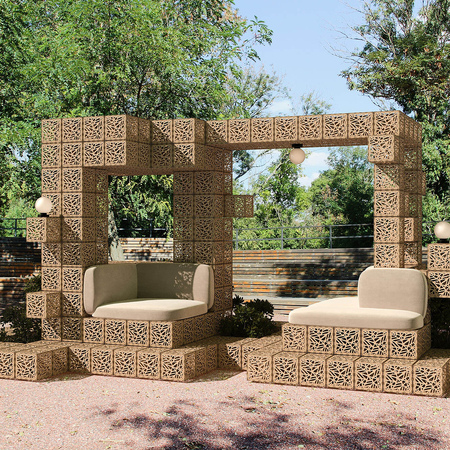
Workplaces are changing faster than ever. Hybrid teams, shifting project cycles, and the rise of deep-work culture demand flexible office layouts that evolve with the business. But most offices still rely on fixed furniture and rigid partitions - making it impossible to adjust spaces quickly without renovation, procurement cycles, or facility downtime.
Modular office systems transform this limitation into an opportunity. Using lightweight structures that staff can reconfigure in minutes, companies can reshape entire environments without noise, contractors, or permits. One set of modules becomes a focus pod today, a brainstorming cluster tomorrow, and a breakout lounge on Friday. This flexibility gives teams the freedom to adapt space to the work they actually do - not the one they inherited.
Below is a practical guide on how to build focus, collaboration, and breakout zones without renovation.

Creating Focus Spaces for Deep Work Without Construction
Most offices struggle to support deep, uninterrupted work. Open spaces amplify noise, create visual distractions, and force employees to search for quiet corners. Renovations offer a solution, but they require permits, downtime, and budget approvals - which makes them unrealistic for dynamic teams.
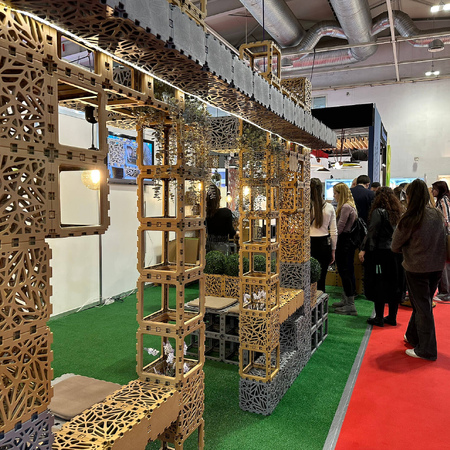
Modular focus zones solve the problem instantly. These structures can be placed anywhere in the office to create acoustic and visual separation, allowing employees to concentrate without leaving the workspace. They transform micro-locations - empty corners, underused hallways, open-plan gaps - into productive, distraction-free environments.
The key benefit is adaptability: focus needs shift daily. Modular systems let companies scale quiet zones up or down depending on project cycles, deadlines, or team workload.
Where modular focus zones work best:
- deep-work pods for developers
- study corners for analysts and researchers
- writing and concept areas for marketing teams
- temporary quiet rooms during peak deadlines
- acoustic buffers between open-space desks
Pro Advice: Treat focus zones as movable “privacy assets.” Shift them weekly based on which teams are in deep-work mode - this dramatically improves productivity without changing office architecture.
Building Dynamic Collaboration Areas That Adapt to Projects
Traditional meeting rooms are static: same layout, same table, same function. But collaboration isn’t static - teams change size, purpose, and energy level depending on the project. Fixed rooms rarely support this level of flexibility, forcing groups to compromise or crowd into improvised spaces.
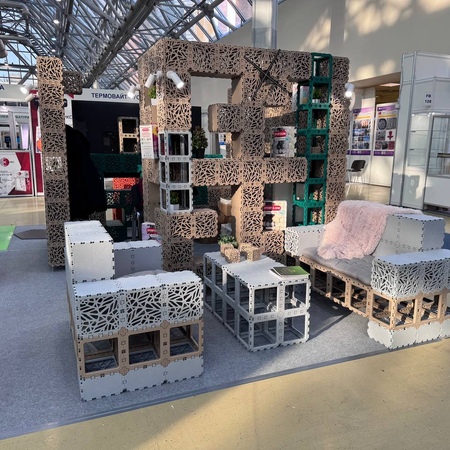
Modular collaboration zones allow teams to shape the environment around their workflow. Modules can be combined into brainstorming islands, project hubs, workshop stations, and semi-open meeting corners. These structures create natural boundaries without enclosing the space entirely, making collaboration more organic and energizing.
Most importantly, modular zones can be rebuilt in minutes - enabling companies to scale up collaboration during product sprints and scale down when teams return to individual work.
Forms of modular collaboration spaces:
- standing brainstorming stations
- semi-open meeting clusters
- workshop tables with movable blocks
- project management hubs
- flexible “scrum islands”
Comparison:
A traditional meeting room = fixed walls, fixed table, fixed function.
A modular collaboration zone = fluid boundaries, movable surfaces, adaptive shapes.
The latter always wins in fast-paced teams.
Designing Breakout Areas That Support Well-Being and Creative Reset
Breakout areas are no longer “nice to have.” Studies show that short micro-breaks improve problem-solving, emotional resilience, and overall performance. Yet many offices treat them as static lounges or leftover spaces with a sofa - not as strategic assets for well-being.
Modular breakout zones allow companies to redesign micro-environments for rest, informal chats, short huddles, and decompression. They can be cozy nooks, soft geometric clusters, semi-private corners, or laid-back seating arrangements - all built from the same modular components used elsewhere in the office. This reduces cost while increasing design consistency.
These zones encourage spontaneous interactions, support creative reset, and help employees transition smoothly between tasks. And because they are modular, teams can change the mood or purpose of a breakout area instantly.
Breakout transformations enabled by modular design:
- soft seating corners for informal chats
- decompression zones near focus areas
- coffee-lounge islands next to collaboration hubs
- flexible rest nooks for individual reset
- quiet micro-lounges for short pauses
Office Lifehack: Place breakout modules at “transition points” - near meeting rooms, between departments, or by natural walkways. These spots maximize usage and encourage casual conversations.
Conclusion: Why Modular Design Is the Future of Office Transformation
Office needs evolve daily - but renovations cannot keep up. Modular office zones provide a smarter, faster, and more cost-efficient way to create focus, collaboration, and breakout environments without construction. They empower teams to adapt their workspace to real work rhythms, reduce acoustic and visual stress, and improve productivity through intelligent, flexible design.
For companies striving to build workplaces that move at the same pace as their people - modular systems are not an upgrade. They are the new standard.
_450x450_390.jpeg)