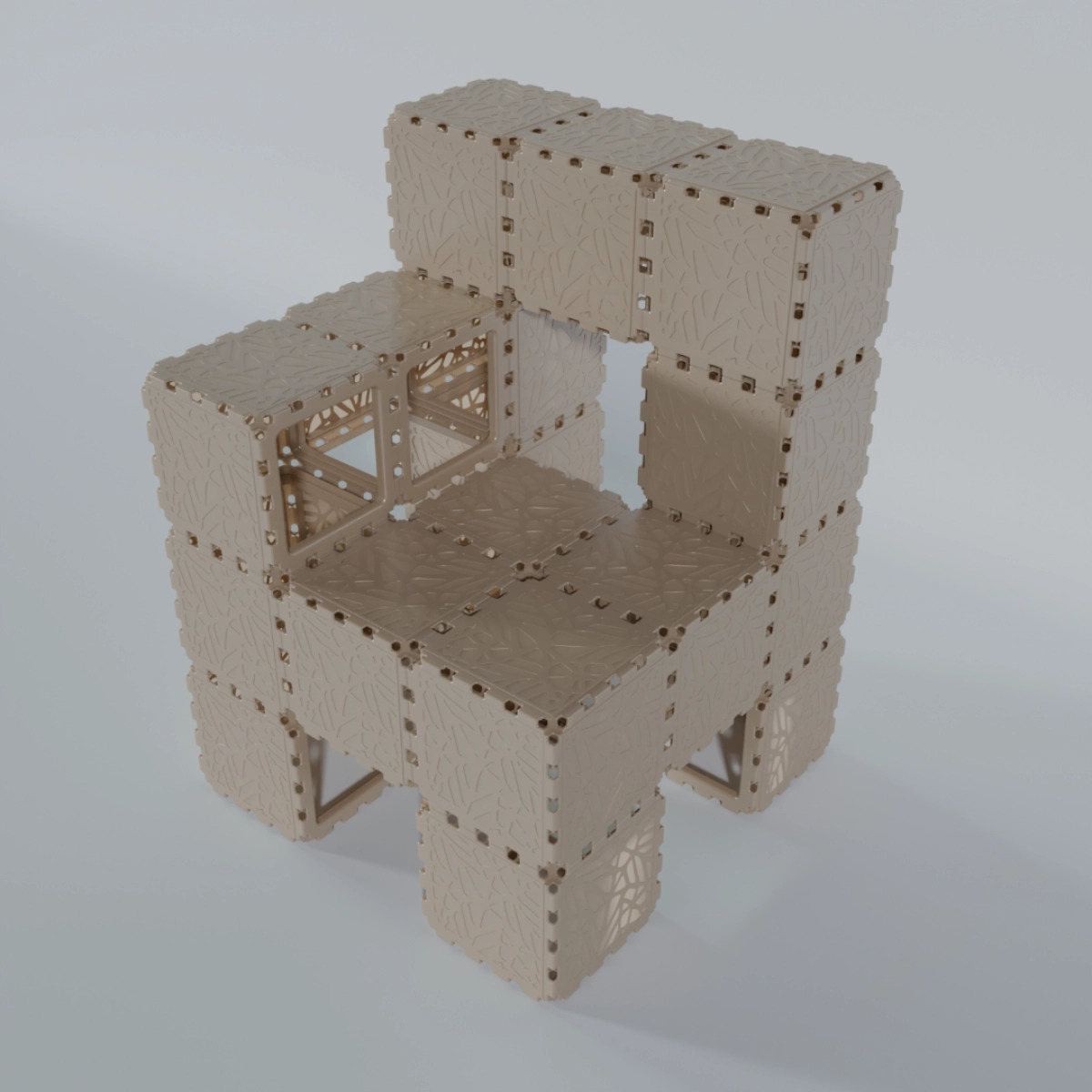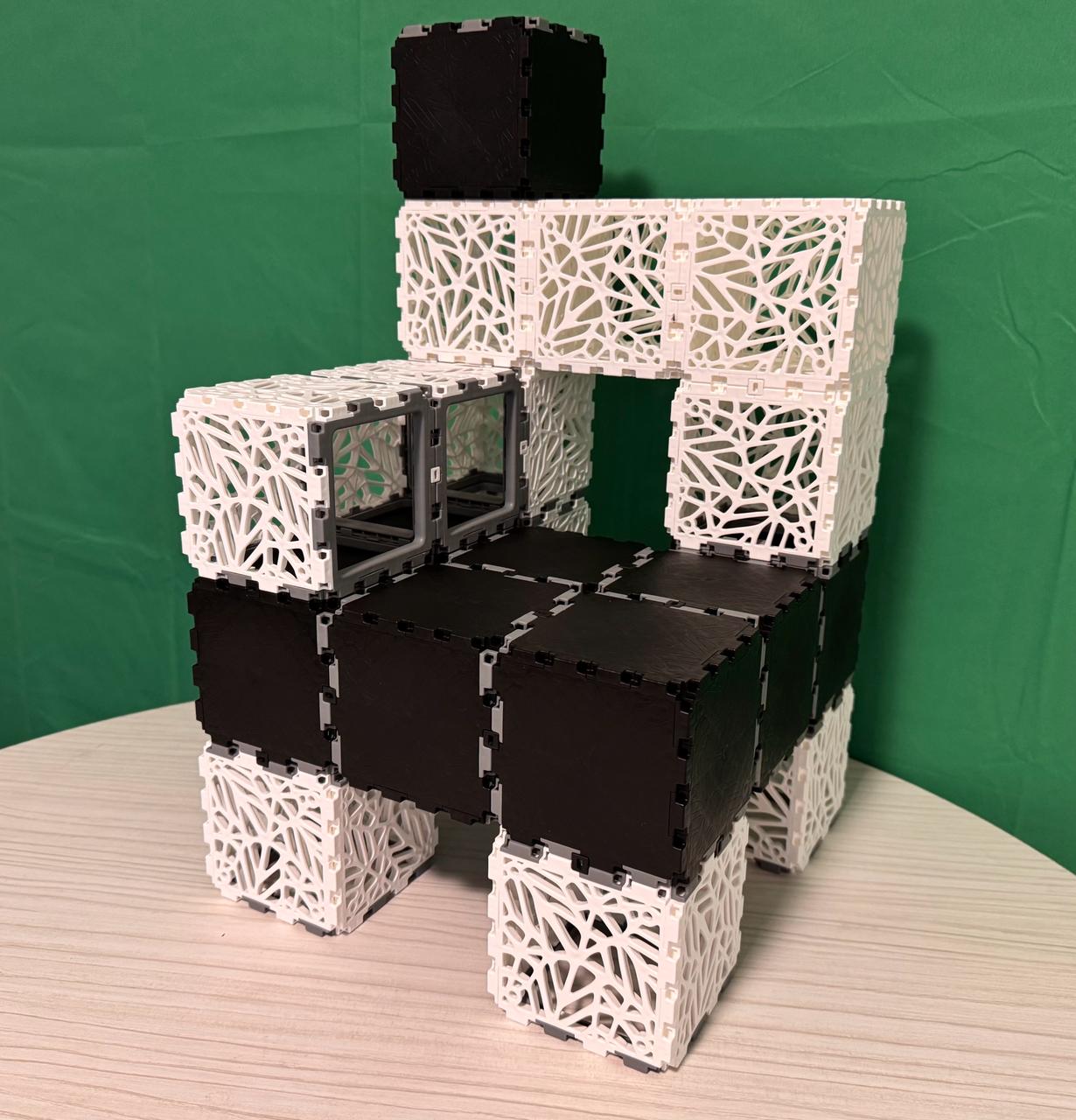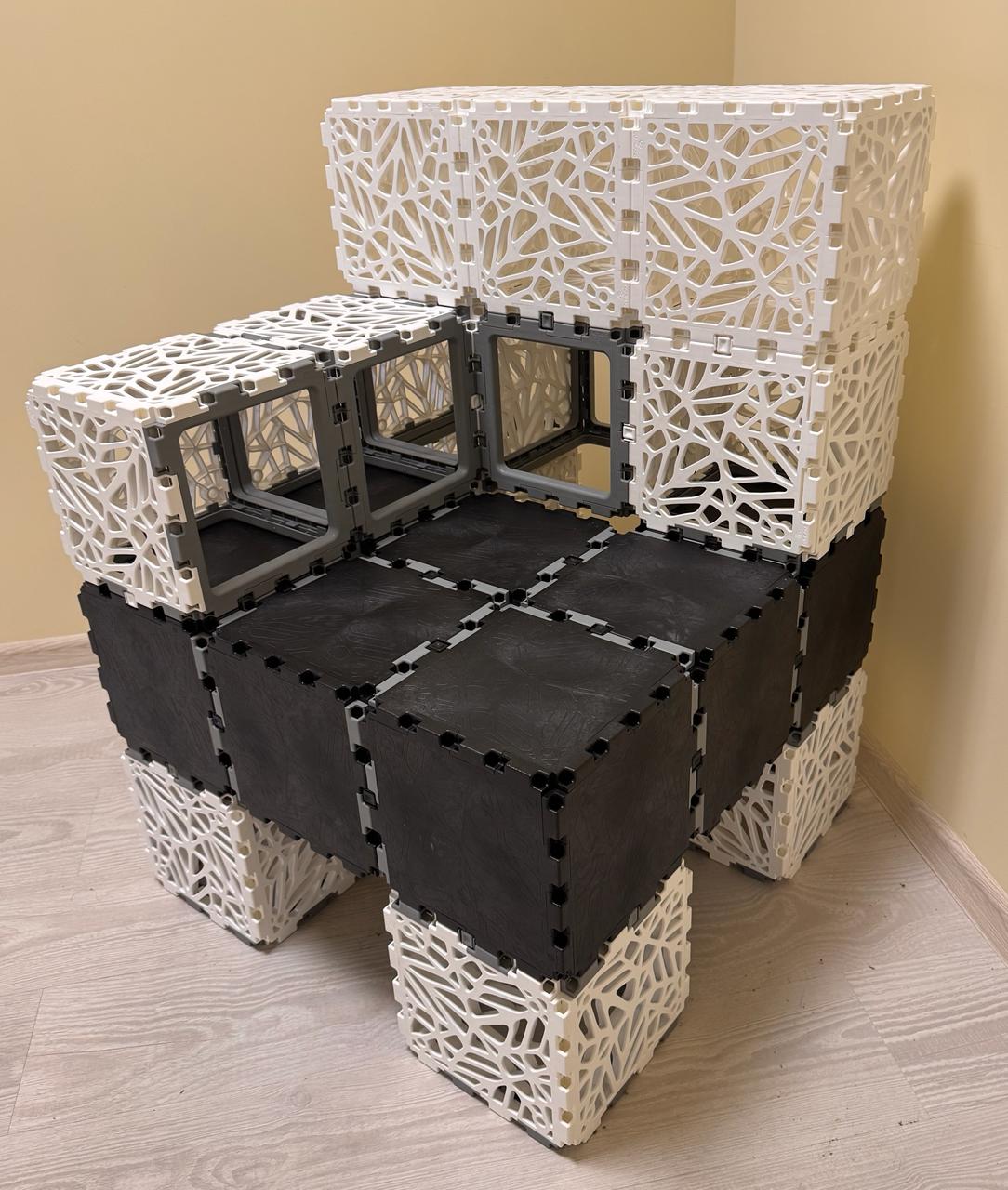
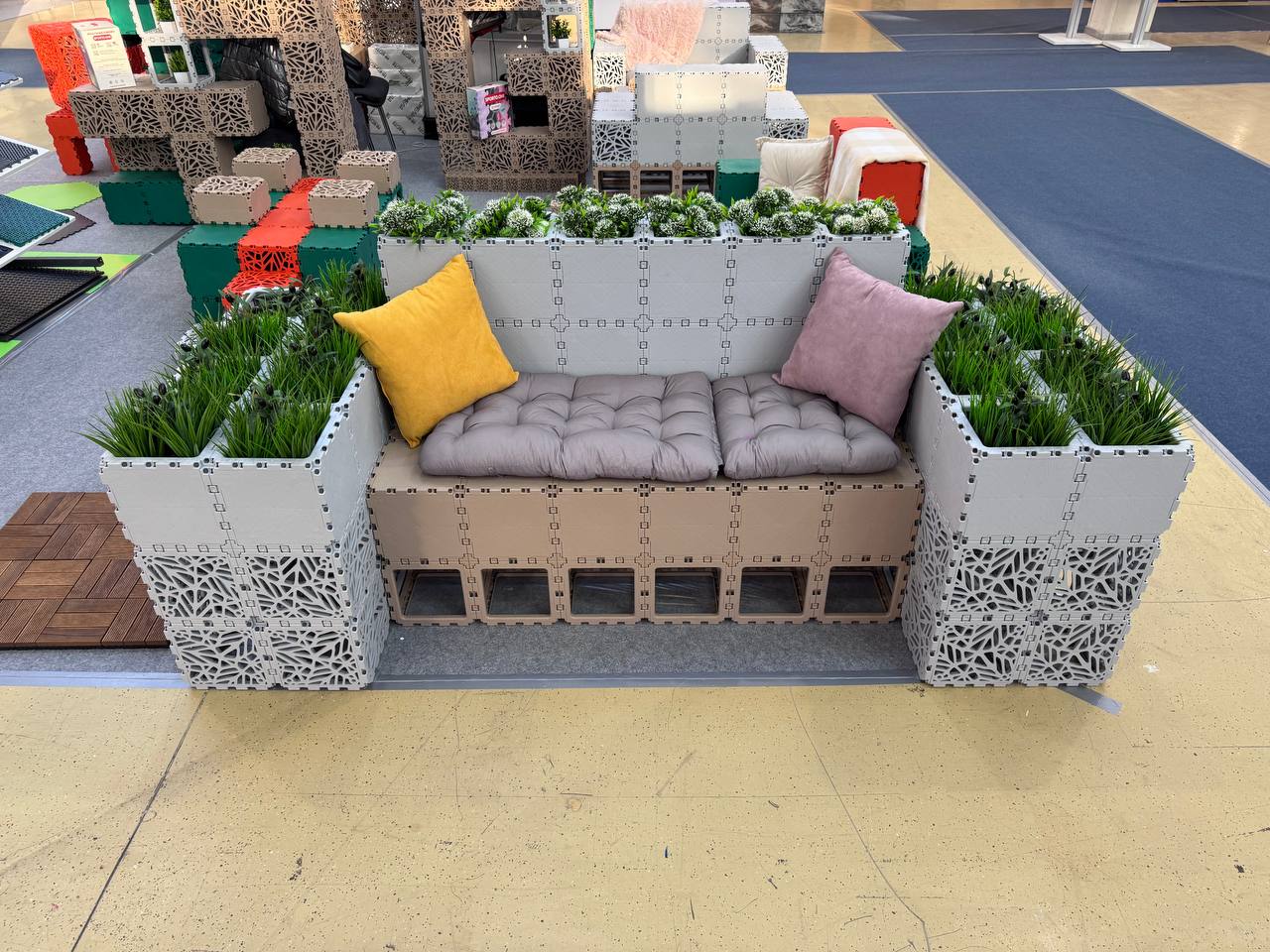
Below are simple recommendations for creating projects from our cubiks. We've tried to lay it all out clearly and in human terms so you can work comfortably and your ideas turn out beautiful and feasible.
Cubik.one invites designers who are interested in creating projects from our modular cubiks to collaborate. If you enjoy constructing objects — furniture, interior elements, small architectural forms, outdoor structures, or something completely unusual — send us your projects. We'll review them, and if everything checks out, we'll place them in the catalog on our website. When someone purchases your project, you'll receive tokens — one for each cubik in the construction (or, what is the same, one token for every six facets). You can use tokens to pay for your own purchases of cubiks or receive them as a payout. Details about tokens will be available on a dedicated page at https://cubik.one/token.
Your task as a designer is to create a beautiful visualization of an object that can be assembled to produce a beautiful and functional product. You don't need to delve into the subtleties of installation, wind reinforcement, precise placement of clips, and other technical details — that will be handled by whoever does the assembly. You don't need to count clips or even show them in your visualization; we'll calculate the necessary quantity ourselves. Your goal is to make the project beautiful and feasible in principle, and also to count all the facets in your construction so we can credit you with tokens and calculate the selling price of the object.
Regarding size and structural limitations. Take a look at examples in our catalog at https://cubik.one/catalog/ to understand the scale and character of objects. For now, please limit the project size to one thousand cubiks. Avoid designing freely hanging beams longer than ten cubiks due to the risk of sagging, tall vertical columns one cubik thick that can sway in the wind, or inverted L-shaped constructions where a horizontal beam sits atop a vertical column, causing the column to bend under the weight. Use common sense and our catalog examples as guides. If we determine that a construction is technically very difficult to assemble or unfeasible, the project may be rejected, but don't worry — this is rather rare and we can just ask you to correct your design.